Friday, 7 April 2017

Six Reasons 'The Matrix' Is Still My Favourite Film After 18 Years

If real is what you can feel, smell, taste and see, then 'real' is simply electrical signals interpreted by your brain. 

-Morpheus, The Matrix

~ ~ ~ ~ ~


Today marks a special occasion: 18 years since The Matrix hit Australian cinemas for the first time on 8th April 1999. This cult classic not only transformed the visual science fiction genre with its groundbreaking special effects and its incorporation of old Kung Fu wire techniques and choreography, it questioned our societal and scientific perspective on the nature of reality. What is real? What makes it real? Culturally influential and now all grown up, here are six reasons The Matrix remains my absolute favourite film of all time. 
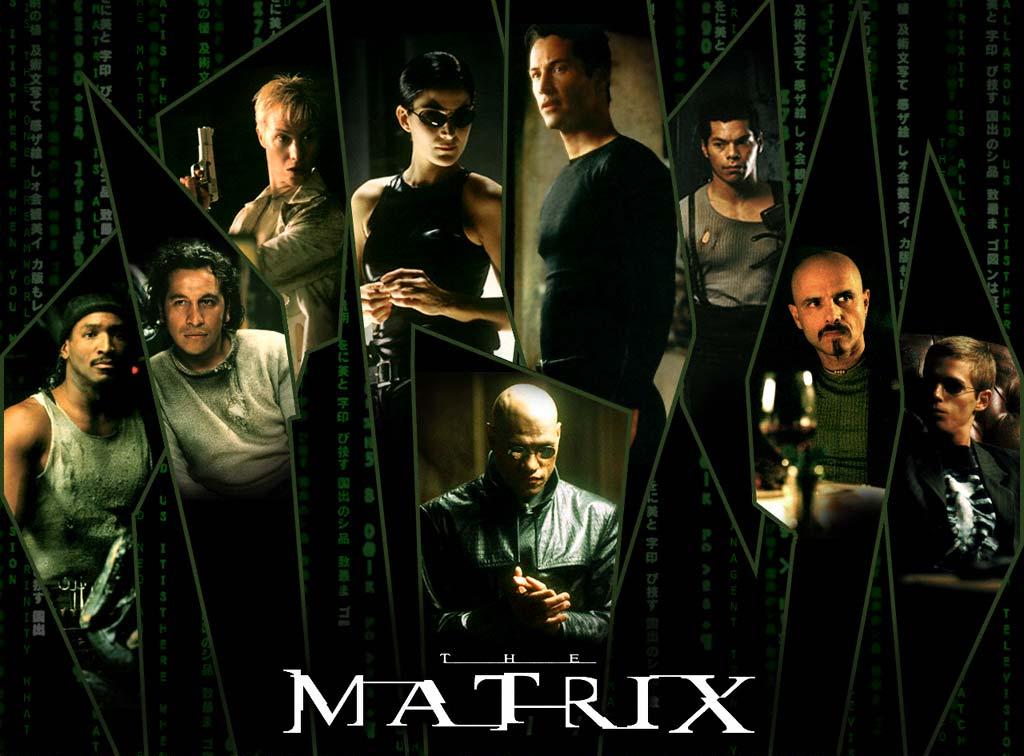
Image borrowed from Wondersinthedark.wordpress


1. Style  

Does this really need elaboration? Everything about this masterpiece’s visual style was unique and paved the way for later films. The Sydney cityscapes, the sunglasses, the severe haircuts, the green filter and the camera angles – not to mention bullet time, but we’ll get to that shortly – all combine beautifully to create the Matrix ‘look’, but nothing holds it together like the leather jumpsuits and trench coats. Just… so cool. An entirely superficial look at my own works of fiction reveal that Renatus’s personal style is heavily influenced by Neo’s. Wonder if he’s a fan, too? 

2. Concept 

You’ve been living in a dream world, Neo. It was eighteen years ago, and nowadays when you watch a brilliantly trippy movie (e.g., Inception) people explain it to you as “the modern Matrix” to describe the phenomena of being so utterly blown away by the implications of a work of fiction that you actually need to watch it again to make sure it really was just fiction. This was the cultural impact of The Matrix, aside from an internet full of What if I told you… memes. The idea that everything we call ‘real’ could be reduced to only electrical impulses interpreted by our primitive brains and could not be substantiated as real in any furthermore convincing sense seemed fine until we watched a film that said our brains were imprisoned in a virtual reality to keep us distracted while evil robots fed on our inert bodies. Eek! But there’s an upside – if you become aware of the system, you can break free, and learn to push the boundaries of that false reality. Hence, Kung Fu. Hence, bullet time. So much awesome. 

3. Vision  

We’ve all seen robot takeover stories, watched the predictable build-up and the epic fight scenes between the disenfranchised but heroic humans and the evil killer robots, which we eventually triumph over. But what if that war has already been and gone, and we lost? What if we were crushed so completely that even the memory of the obliteration of our way of life has been forgotten to the ages, our minds enslaved to serve the purpose of our own wayward machine creations even as we live our lives believing this will never happen? You think that’s air you’re breathing? This is not a future we’re often subjected to in cinema, where the whitewashed handsome hero pilot can always pull out just one more stop to save us all. Every time I watch (and rewatch… and rewatch) this film, I’m blown away by the vision of the Wachowskis, appearing to set their story in the modern day but actually placing our reality well into a future we should already see coming. Because robots are bad. 

4. Action 

Yes! I can finally talk about bullet time, the cinematic technique made famous by this film and generally used pretty poorly and excessively in successive movies both in this franchise and in others. Some films had dabbled with this technique previously, achieving a similar effect, but this is where the magic happened, baby. Used artfully to demonstrate the Woke characters’ talent for bending the rules of the computer reality, in particular their ability to jump really high before kicking people awesomely or Neo’s incredible speed, the technique of using a ring of cameras to capture sequential images of an event from many angles (later stitched together to create a temporal effect) gained its name from the very cool scene in which Neo dodges bullets. 

On the topic of action, the fight choreography is epic, and all the BS is totally explainable within the realm of the storytelling, which so few big action films bother to do. Old-school Kung Fu wire work and perfectly executed martial artistry combine to give us some timelessly awesome sequences. Here we can make special mention of the dojo scene, Neo vs Smith, and Trinity’s escape at the beginning, but nothing does it like the lobby shootout, a.k.a. my favourite scene in any film EVER. 


5. Alice parallels 

I’m sure it comes as no surprise to anyone reading a blog entitled Six Impossible Things Before Breakfast that I am something of an Alice fan, though an adolescence of adoring both The Matrix and its 150-year-old influencer Alice in Wonderland has left me unsure which love came first and birthed the other. The Matrix draws on themes and references from the trip-out of a children’s tale about a little girl who maybe dreams up a world beyond her imagining and struggles to apply her mundane, socialised logic to the wavery rules of this strange new reality. The validity of her time in Wonderland is left in question but the value of Alice’s tenacious curiosity and open-mindedness in getting her as far as she gets is not. Neo’s experience runs parallel to Alice’s. 

6. Impact 

A surprisingly philosophical film, The Matrix has provided me with many inspiring quotes to consider while I contemplate life and existence, but this is not the only way in which this film has influenced me. In so many ways, my fascination with the world the Wachowskis created has shaped the person I have become - encouraged me to question my own perceptions, demanded me to look past what I'm told to take as fact, and even introduced me to the world of fanfiction, where I learned so much about experimenting with writing that I still apply today. 

Happy Australian birthday, Matrix. Welcome to the real world.

Monday, 27 February 2017

Book Review: The Messenger, by Markus Zusak

The MessengerThe Messenger by Markus Zusak
My rating: 4 of 5 stars

What a lovely book. I suspected I would enjoy it, having loved The Book Thief, and I was not in the least disappointed. I found the whole thing such an original concept, this placid no-hoper protagonist drifting through life until unexpectedly, a series of playing cards appear in his letterbox with clues directing him to the homes of strangers who, in different ways, need him to help them find what will bring them happiness. Ed is the messenger, finding courage and soul and integrity inside himself as he divines his way through these challenges and connects each of his 'messages' with their needs, finding his place in the world while he is at it. I loved the Australianness of the language, setting and detail; I loved the beauty of Zusak's way with words. I smiled as I read the ending, which I did not see coming, though I knew there had to be some unique answer to it all. In summary, a beautiful, lovely book, light and casual but with heart.

View all my reviews

Monday, 6 February 2017

Six Favourite Male/Female Friendships from Sci-Fi and Fantasy


But the mere fact that they were still there on either side of him, speaking bracing words of comfort, not shrinking from him as though he were contaminated or dangerous, was worth more than he could ever tell them.

-Harry Potter and the Half-Blood Prince

~ ~ ~ ~ ~

Despite setting out with The Elm Stone Saga to write a modern fantasy with cool stuff like MY OWN STYLE OF MAGIC and A POTENTIALLY HAUNTED MANSION and TRAUMATISED CHARACTERS, what ended up being my number one reason for writing was to see the friendship unfold between Renatus and Aristea. As they have grown closer and come to understand one another better they have only interested me more. I admire their loyalty, their warmth, their uncompromising demands on the other to be the best version of themselves they can be, and most of all, what goes unsaid – the silent shared looks of understanding and the reading of one another’s body language as they intuit the other’s feelings and reactions. 

In television and film, this formula for deep affection between male and female friends can be a key element in building a solid cast of characters, and is definitely a common one across my favourite fandoms. I’ve compiled a list of my top six favourite male/female friendships from science fiction and fantasy, as I’ve no doubt drawn on these as inspiration in writing Renatus and Aristea over the years.

1. Sam Carter and Daniel Jackson, Stargate SG1
 
In a core cast of four on a sci-fi show with opposing themes of military leadership and social justice, Drs Carter and Jackson are the two genius scientists opposite all-American Colonel O’Neill and alien freedom fighter Teal’c. Both married to their work, Sam and Daniel bond quickly in the show’s early episodes when they find in the other not only a similar intellect, but a shared tendency to question military action where it affects life, even though Sam is herself an Air Force Captain. I loved in the show how easy these characters were with one another, talking geek over O’Neill’s head and sharing small jokes at his expense or even just silent condescending looks they make no effort to hide. 


2. Harry Potter and Hermione Granger, Harry Potter
 
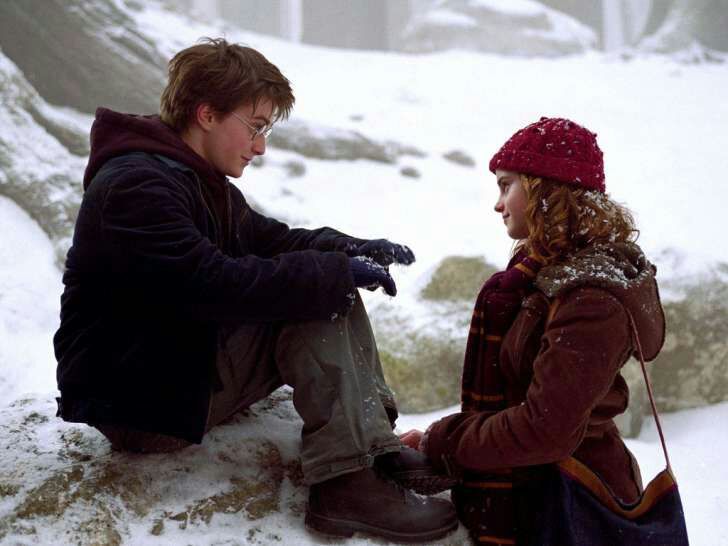
The perfect platonic friendship. Harry can ask Hermione anything and she can reply in complete honesty and not only is the friendship unharmed, the fact that they are opposite sexes barely registers. They are friends because they are compatible people. Harry admires Hermione’s intelligence and problem-solving abilities, while Hermione sees qualities in Harry that he doesn’t recognise, and she helps him to see those. 


3. Felix Dawkins and Alison Hendrix, Orphan Black

One of the many wonderful mummy-helpers of my classroom recommended this show to me and I am hooked, and one of the (many) reasons I love this show is the adorable connection between Felix, the protagonist Sarah's foster brother, and her many clone sisters. He relates to each of the sisters differently, and often seems to get along with them better than Sarah herself, but probably the most entertaining to me is the dramatic friendship that sparks between Felix and prissy-perfect soccer-mom Alison. Finally, someone else just as over-the-top as they are who can appreciate how a public speaking event or bad hair can outweigh global conspiracies and life-or-death situations, any day of the week. I love seeing characters find their soul friends, and this is so sweet and beautiful amidst the heaviness of some of the show's other themes.


4. Sansa Stark and Tyrion Lannister, Game of Thrones TV

Really, really hope these two will find each other in this year's season, or the next one if necessary - I loved what these seemingly incompatible and extremely different characters brought out in one another when forced into a reluctant marriage. Disempowered little lamb Sansa finds her lost spine in the friendship that emerges over their shared hatred of King Joffrey while funny womaniser Tyrion proves to himself that he is better than is expected of him. Shared smirks at Joffrey's wedding, and Sansa standing up for Tyrion though she hasn't had the strength to stand up for herself in several seasons, are to me what true friendship is all about. 


5. Olivia Dunham and Lincoln Lee, Fringe

A fast-paced four-and-a-half season long show stuffed full of parallel universes, conspiracies and cover-ups, unlikely but possibly plausible science and a generation-long story-arc crossing timelines and dimensions does not sound like it has the room for a beautiful platonic friendship to shine, but even against the love story and the insightful dissection of a damaged father-son relationship that dominate the narrative, lead character Olivia's friendship with eventual FBI partner Lincoln stood out for me. The unquestioning devotion all versions of Lincoln show to all versions of Olivia, with no expectation of anything more, and her swiftness to trust him even when it's not her Lincoln or she's not his Olivia speaks to my vision of the deepest of innate friendships. 


6. Fox Mulder and Dana Scully, The X-Files 
 
Uh, obviously these two make the list, even if this friendship deviates from the 'platonic' zone at some point heavily debated by fans even after twenty years. Despite outwardly seeming opposites and despite bickering constantly about opposing expectations of their investigations, these partners turned friends share a common drive to understand the truth of everything they come across and to bring those who would hide it for their own gains to justice. Demonstrating that 'just friends' is not 'just' anything when you're platonic soulmates, Mulder and Scully are the friends we all wish we had - painfully honest, desperately loyal and forever watching the other's back. Friendship is trust at this fundamental level. This is what I hope my writing of Renatus and Aristea channels!